
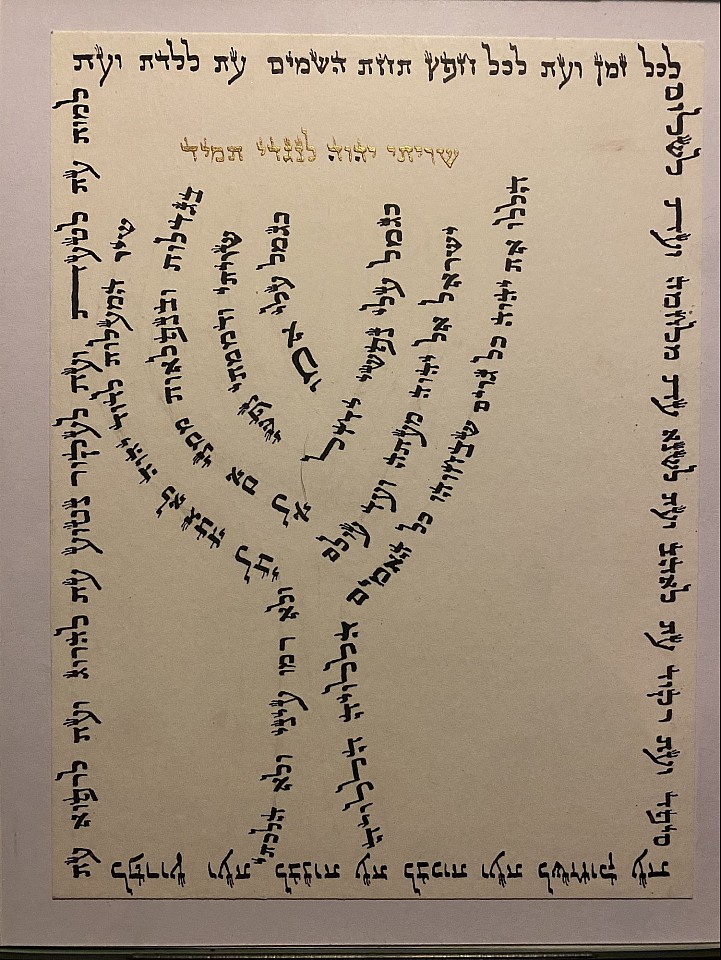
My Work as a Sofer STaM
I am a Sofer because I believe that holiness lives in attention. The work of safrut already assumes imperfection: human hands copying divine words, every letter dependent on care, intention, and humility. From the moment I began training as a Sofer, I learned that sacred writing is not about speed, inspiration, or self-expression. It is about discipline. Stillness. Responsibility. A single misplaced stroke can invalidate an entire section of text. Not because G-d demands perfection, but because meaning depends on presence.
As a Sofer, I am constantly aware of the body at work. The posture of my back. The steadiness of my breath. The weight of the quill. The texture of parchment. Writing sacred text is not abstract; it is profoundly physical. Each letter demands full attention, and every pause matters as much as every stroke. I cannot rush. I cannot multitask. I cannot write if my mind or emotions are uncontrolled. Safrut has taught me that intentional slowness is itself a spiritual practice.
I approach the text not as its author, but as its servant. My task is not to interpret or innovate, but to receive with fidelity. And yet, paradoxically, safrut has made me more aware than ever of my own presence. Every letter reflects my state of mind. Every error reveals distraction, fatigue, or impatience. There is no hiding in this work. The Torah does not care how confident I am; it responds only to how careful I am. That honesty has shaped me as much as the skill itself.
Being a Sofer has also given me a deep respect for transmission. I am one hand in a chain thousands of years long. I do not own these words. I hold them briefly and pass them on. That awareness keeps me grounded. It reminds me that tradition survives not because people were perfect, but because they showed up, again and again, to copy, correct, repair, and try again. Tikkun is built into the work. Mistakes are expected. The question is not whether errors will happen, but how I respond when they do.
I do not separate my safrut from the rest of my creative and theological life. On the contrary, it informs everything I write. Safrut taught me that language carries weight, that letters are not neutral, and that care is a form of reverence. It taught me that intentionality matters more than polish, and that restraint can be more powerful than invention. When I adapt texts, write poetry, or create liturgy, I carry that discipline with me — even when my voice becomes personal or raw.
As a queer, neurodivergent convert, standing in this lineage has never felt automatic or easy — and that makes the work all the more sacred to me. Every letter I write feels like an act of claim and an act of humility at once. I belong here not because I was born into it, but because I commit to it with my whole self. My hands learn what my heart already knows: that holiness is not inherited passively, but practiced.
At its core, being a Sofer means choosing care over certainty. Choosing patience over urgency. Choosing responsibility over ego. It is a practice that reminds me daily that sacred work does not demand flawlessness — it demands presence. And as long as my hand is steady, my breath is slow, and my intention is honest, I am doing holy work, one letter at a time.
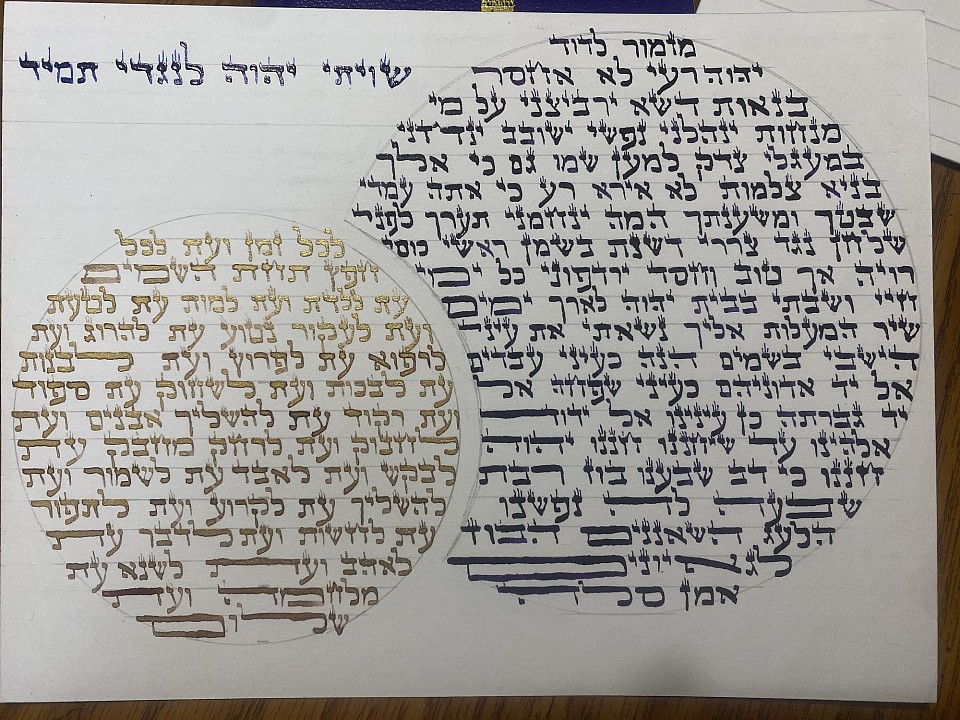
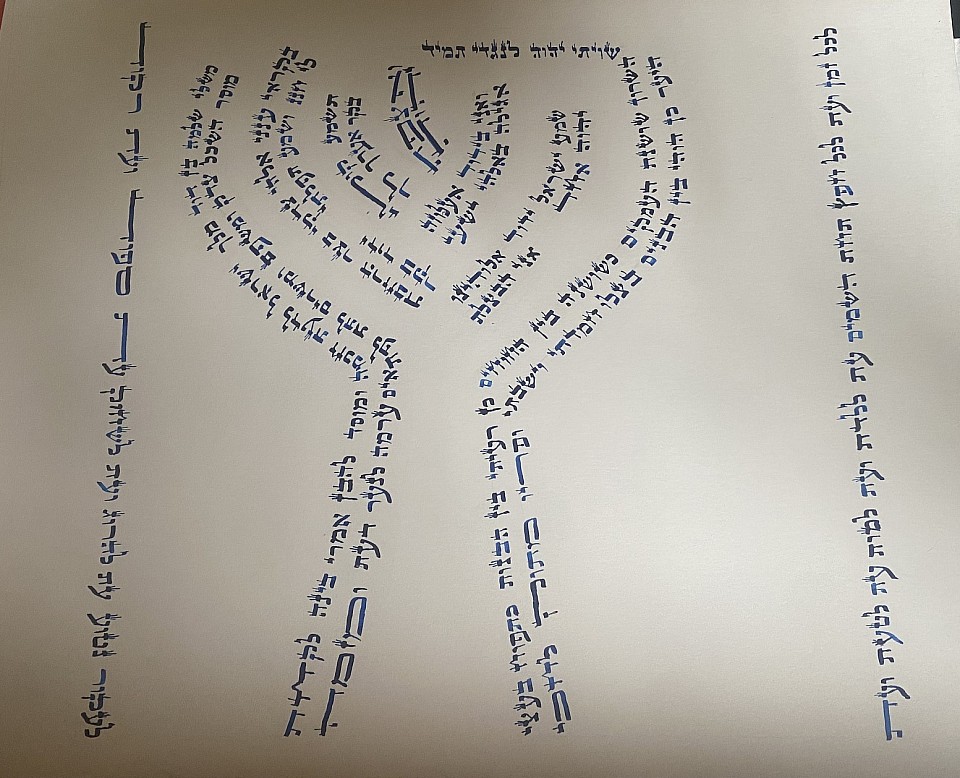
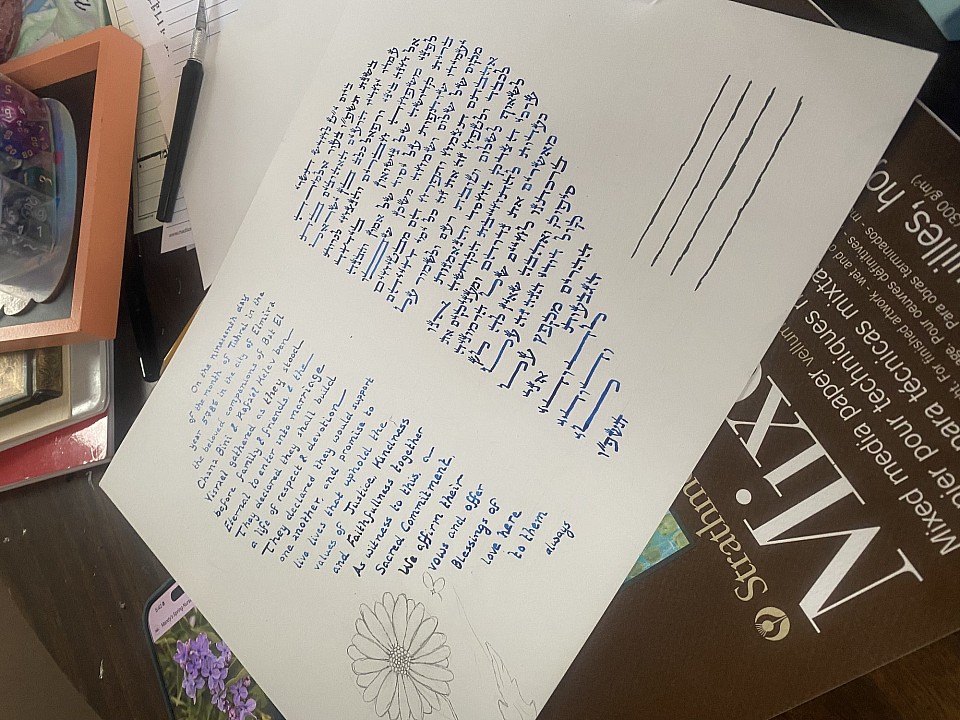
My work as a Sofer for commission is grounded in the same values that guide all of my sacred writing: care, honesty, intention, and relationship. I do not mass-produce ritual objects, and I do not treat them as decorative items detached from their purpose. Every commissioned piece I write is meant to be used, lived with, touched, kissed, read from, and relied upon. These texts are not symbols of Judaism — they are Judaism in action, written slowly, deliberately, and with full awareness of the responsibility involved.
When someone commissions me as a Sofer, I understand that they are trusting me with something deeply personal. A mezuzah guards a threshold. A ketubah binds two lives together. A shiviti anchors a space of prayer or remembrance. A megillah or sefer Torah carries communal memory across generations. I approach each project not as a detached artisan, but as a caretaker of meaning. I write with kavvanah, not only for technical correctness, but for the human reality that this object will inhabit long after it leaves my hands.
My writing style as a Sofer is clean, traditional, and reverent, without unnecessary flourish. I favor clarity and balance over ornamentation. Letters are carefully spaced, consistent, and legible, shaped to honor both halakhic standards and aesthetic harmony. I do not embellish the text in ways that risk readability or validity. The beauty of the work comes from restraint: from letters that know their place and do not compete for attention. Even in custom pieces, my focus remains on writing that feels grounded, calm, and enduring.
At the same time, I am attentive to the people behind each commission. Consultation is an essential part of my process, not an afterthought. Whether determining layout, size, script style, or textual details, I work collaboratively to ensure that the final piece aligns with the spiritual and emotional needs it is meant to serve. I do not rush this stage, because sacred writing should never feel transactional. These objects are meant to accompany people through years of life change, growth, and memory, and that deserves time.
My current commission offerings reflect both accessibility and care:
Mezuzot are $40 plus shipping. Each mezuzah is written by hand, checked carefully, and prepared with the knowledge that it will stand watch over a home, marking daily comings and goings with quiet holiness.
Ketubot are priced through consultation, plus shipping. Because no two couples or commitments are the same, ketubot require conversation, intention-setting, and collaborative design. The text, layout, and scope of the work are determined together to reflect the relationship it sanctifies.
Sh’vitim are offered at $30 for standard designs and $50 for custom pieces, plus shipping. These works are meant to root prayer spaces in presence and focus, and I approach them as anchors for daily spiritual practice rather than wall art alone.
Megillot and Sifrei Torah are priced through consultation, plus shipping. These projects demand extensive planning, sustained time, and deep responsibility. Any such commission involves thorough discussion of scope, expectations, timeline, and use to ensure that the work is undertaken with the seriousness it deserves.
Custom work is also available through consultation, plus shipping. If there is a sacred text or ritual writing not listed above, I welcome thoughtful inquiry. Custom work is assessed based on complexity, size, and time commitment, with transparency throughout the process.
Ultimately, what I offer as a Sofer is not speed or spectacle. I offer presence. I offer writing shaped by training, intention, and lived relationship to the tradition. My goal is that each piece I write feels steady in the hand, clear to the eye, and honest in its purpose — sacred texts meant not just to exist, but to endure.
