
B'tzelem HaLo Mushlam

B'tzelem HaLo Mush'lam Project
B’tzelem HaLo Mush’lam is, at its heart, an act of conversation rather than conquest. I did not set out to replace the Torah, to “fix” it, or to claim some kind of superior insight into the original Hebrew. This is not a scholarly critical edition, not a literalist translation, and not an attempt to reconstruct an imagined ur-text. It is an adaptation — deliberately, openly, and unapologetically — built on the foundation of the JPS 1917 English translation. That choice matters to me. JPS 1917 occupies a particular place in Jewish textual life: it is formal without being opaque, reverent without being florid, and deeply shaped by the theological and linguistic instincts of an earlier American Jewish moment. By working from it rather than directly from the Hebrew, I am acknowledging both my own limits and my own location. I am translating a translation because I live inside a chain of transmission, not at its origin.
The title, B’tzelem HaLo Mush’lam, signals the core theological posture of the project before a single verse is read. “In the image of the not-perfect” is not a clever rebranding; it is a refusal of inherited assumptions. Classical theology often leans on human imperfection as a foil for divine perfection. I reject that contrast. This project proceeds from the belief that if humanity is created in the image of God, and humanity is demonstrably incomplete, conflicted, emotional, inconsistent, and wounded, then God must also be encountered through those same qualities. Not deficient, but unfinished. Not broken, but in process. My adaptation does not try to smooth the Torah into a morally tidy or theologically airtight document. Instead, it lets tension breathe. Contradictions remain present. Divine anger is not excused away. Silence is not patched over. Ambiguity is not treated as a problem to be solved, but as an essential feature of a living text.
Because this is an adaptation of JPS 1917, my work focuses less on lexical exactitude and more on theological resonance. I did not ask, “Is this the most literal way to render the Hebrew?” but rather, “Is this how this idea actually lands in English, today, in a body like mine, in a world like ours?” Where the JPS language leans archaic in ways that create unnecessary distance, I modernize it. Where its formality carries sacred weight, I preserve it. Where its phrasing subtly encodes assumptions about hierarchy, gender, power, or divine authority that I no longer believe are neutral, I intervene — carefully, transparently, and consistently. I am not pretending the English itself is sacred; I am treating it as a vessel that must be reshaped if it is to remain usable.
My linguistic choices are intentionally restrained. I do not chase novelty for its own sake, and I do not sprinkle contemporary slang into the text to make it feel “relatable.” The tone I aim for is timeless without being antique, poetic without being ornamental. Sentence structures are often slightly pared down, not to simplify the ideas, but to remove the excess scaffolding that earlier English writers relied on to signal seriousness. I retain rhythm, repetition, and parallelism — especially where JPS already mirrors the Hebrew’s internal music — because meaning in Torah is never carried by content alone. At the same time, I allow myself to re-weight emphasis. A single shifted word can change how a verse breathes, where the emotional center of gravity falls, and whether God feels like a distant monarch or a present, struggling partner.
One of the guiding principles of B’tzelem HaLo Mush’lam is honesty about mediation. I do not hide the fact that this text passes through my hands, my theology, my body, my queerness, my grief, my anger, my love for Torah, and my frustration with how it is often wielded. I resist the fantasy of objectivity. Instead, I lean into responsibility. Every choice I make is an assertion that translation is an ethical act. To adapt the Torah is to make claims about what matters, whose voices are centered, and which assumptions are allowed to remain invisible. I take that seriously — not by freezing the text in reverence, but by engaging it with care.
The reason I am doing this work is inseparable from how I encounter Torah in my own life. I do not meet the text as an abstract artifact. I meet it in moments of rupture, doubt, return, and stubborn commitment. I am interested in a Torah that can sit with brokenness without demanding its immediate repair; a Torah that can reflect a God who learns, reacts, regrets, and stays in relationship anyway. By adapting JPS 1917 rather than discarding it, I am situating myself within an inherited tradition while still asserting that tradition must remain permeable. B’tzelem HaLo Mush’lam is my way of saying that holiness does not require perfection — of the human, of the divine, or of the text itself. It requires presence, engagement, and the willingness to keep reading, even when the mirror is uncomfortable.
Chumash and Tanakh B'tzelem HaLo Shalem
The Chumash B’tzelem HaLo Mush’lam and the larger Tanakh B’tzelem HaLo Mush’lam grow out of the same theological soil as the translation project itself, but each expands that foundation in a different direction. Together, they are my attempt to live inside Torah and Nevi’im and Ketuvim as they truly function in Jewish life: not as sealed containers of fixed meaning, but as porous, interwoven, fiercely debated, deeply lived texts. I am not building pristine critical editions; I am building mirrors, lenses, and doorways. Both the Chumash and the broader Tanakh volumes take seriously the reality that interpretation is not secondary to Scripture — it is Scripture’s ongoing life.
The Chumash B’tzelem HaLo Mush’lam is, in some ways, the most intimate of the projects. It pairs my adapted English translation with my own Divrei Torah for each parashah, in both English and original Hebrew. This creates a layered reading experience where the weekly portion is not simply translated but responded to, argued with, wrestled against, and held. Each D’var Torah is written out of my lived reality: my personal history, identity, theology, queerness, grief, growth, and all the messy, contradictory aspects of trying to remain in relationship with a text that has shaped me even when it has cut me. The Divrei Torah are not ornamental; they are the core spiritual engine of the Chumash. They reveal the lens through which I approach the text, the questions I bring to it, and the ways I allow it to speak back.
Because this project is rooted in B’tzelem HaLo Mush’lam — seeing humanity and the divine alike as non-static and non-perfect — my Chumash refuses the expectation that commentary must be detached, universal, or sanitized. Instead, each parashah becomes a site of encounter: between ancient and modern, between inherited tradition and personal transformation, between the text as it is and the text as it might be when read through a life that does not neatly align with the assumptions of our ancestors. By including both my English and Hebrew D’varim, I am acknowledging that interpretation is also a bilingual act. Hebrew carries weight, ancestry, and resonance; English carries immediacy, intimacy, and the emotional vocabulary of my lived experience. Both languages are necessary to express the fullness of the struggle and the love I bring to the text.
The Tanakh B’tzelem HaLo Mush’lam takes this same ethos and expands it into a much larger, more ambitious tapestry. Where the Chumash focuses on sustained personal sermonic engagement, the Tanakh volumes emphasize commentary, marginal notes, footnoted analysis, and original midrashim — all presented in both English and Hebrew. Rather than attaching a single reflective piece to each section, the Tanakh project surrounds the biblical text with layers of interpretive scaffolding. Some notes clarify theological tensions; others illuminate narrative fractures, moral discomforts, or linguistic nuances inherited from the JPS 1917 foundation. Some footnotes serve as quiet provocations; others intervene directly when the text brushes against modern ethical wounds. My original midrashim appear throughout as creative expansions, reimaginings, or counter-narratives that inhabit the gaps, silences, and shadows of Tanakh. They are meant to feel ancient and contemporary at once — a continuation of the Jewish insistence that no verse settles quietly.
In both projects, my commentary does not pretend to be neutral. It grows from the conviction that the Tanakh is already imperfect on its surface, and that perfection is not the measure of holiness. A God who changes, who regrets, who erupts in anger, who withdraws, who reaches out again — this is a God I can meet honestly. A text that contradicts itself, challenges itself, and exposes the humanity of its authors and characters — this is a text I can love without pretending it is something it is not. My footnotes and midrashim are not attempts to repair the text into something more comfortable; they are attempts to read it truthfully, with compassion and accountability.
By embedding my voice alongside the biblical text in these ways, I am acknowledging that Jewish reading is always relational. No one ever receives Torah or Tanakh passively. We inherit a tradition built on argument, reinterpretation, resistance, devotion, and the audacity to question the divine. B’tzelem HaLo Mush’lam extends that tradition by insisting that our imperfections — our doubts, wounds, identities, traumas, hopes, and desires — are not intrusions into sacred reading but essential components of it.
The Chumash B’tzelem HaLo Mush’lam functions like a conversation held parashah by parashah, a yearlong spiritual dialogue. The Tanakh B’tzelem HaLo Mush’lam functions like a library, with commentary that spirals outward, offering new entry points, new readings, new challenges, and new invitations. Together, they form a single, sprawling commitment: to encounter the divine and the human as they are, not as we wish they were; to build holiness out of incompleteness; and to claim my place, openly and unapologetically, within the ever-unfinished story of Jewish interpretation.
Siddur B'tzelem HaLo Shalem
Siddur B’Tzelem HaLo Mush’lam is my attempt to build a daily prayer life that tells the truth. Not the polished truth, not the aspirational truth, but the lived one — the kind that unfolds in ordinary mornings, distracted afternoons, restless evenings, and sleepless nights. This siddur grows out of the same theological commitment as all of my B’Tzelem HaLo Mush’lam projects: the belief that prayer does not require a perfected self, a stabilized faith, or an unchanging God. It assumes, instead, that both the one who prays and the One being prayed to are encountered in motion, in fracture, and in ongoing becoming.
This is a siddur written for people who show up inconsistently, who love Judaism fiercely and quarrel with it just as fiercely, who are not interested in pretending that every day feels spiritually upright. I do not treat prayer as an obligation to perform belief, but as an opportunity to practice presence. Siddur B’Tzelem HaLo Mush’lam does not ask the worshipper to suspend doubt or suppress discomfort in order to fit into inherited forms. It meets the pray-er where they are — anxious, grieving, numb, hopeful, distracted, grounded — and insists that this, too, is a legitimate starting point for holiness.
Structurally, the siddur maintains recognizable anchors of Jewish liturgy so that it remains firmly within the tradition rather than orbiting around it. The flow of daily services, the rhythms of Shabbat and sacred time, and the emotional arc of Jewish prayer are preserved intentionally. At the same time, these structures are treated as frameworks rather than cages. Language is adapted, expanded, and reframed where necessary to reflect a theology that does not assume divine omnipotence without vulnerability, or human agency without limits. Traditional prayers are approached as inherited conversations, not immutable declarations, and my English stands alongside Hebrew not as an explanatory footnote, but as a prayer language in its own right.
The linguistic choices throughout the siddur are shaped by care for both clarity and gravity. I avoid archaic English that creates artificial distance, but I also avoid flattening the liturgy into casual speech. Prayer, for me, should feel spoken and weighty at the same time. Where the traditional text leans heavily on hierarchical or transactional theology, I gently rebalance it toward relationship, struggle, and mutual presence. G-d is not framed primarily as ruler or judge, but as companion, witness, and co-struggler in the work of existence. Humanity is not flattened into either depravity or triumph, but held in tension — capable of harm and repair, certainty and confusion, devotion and resistance.
Siddur B’Tzelem HaLo Mush’lam also makes space for emotions that conventional siddurim often sidestep or sanitize. Anger at G-d is not treated as a breach of faith but as evidence of relationship. Exhaustion is acknowledged as a spiritual reality, not a moral failure. Joy is present, but it is never demanded on schedule. Silence appears intentionally, alongside prayers that do not resolve neatly. In keeping with the theology of imperfection, the siddur resists the idea that every service must reach uplift or closure. Sometimes prayer ends in tension, and that tension itself becomes the offering.
This siddur exists because I do not believe daily prayer should require emotional dishonesty. I wanted a text that could be prayed from bed as easily as from a sanctuary, that could hold both routine and rupture, that could accompany someone through mental illness, grief, transition, and ordinary survival without insisting they mask those realities in sacred language. It is written with an awareness that many people who long for Jewish prayer have been pushed away by liturgy that assumes normative bodies, stable lives, binary identities, or uncomplicated relationships with authority. Siddur B’Tzelem HaLo Mush’lam refuses to treat those exclusions as collateral damage.
Ultimately, this siddur is an invitation to return again and again — not to perfection, but to presence. It imagines prayer not as a ladder one climbs day by day toward spiritual mastery, but as a practice of staying in conversation with a world and a God that are both unfinished. Siddur B’Tzelem HaLo Mush’lam exists for those who want to pray honestly, inconsistently, stubbornly, and tenderly — and who believe that such prayer, in all its imperfection, is already made in the image of something holy.
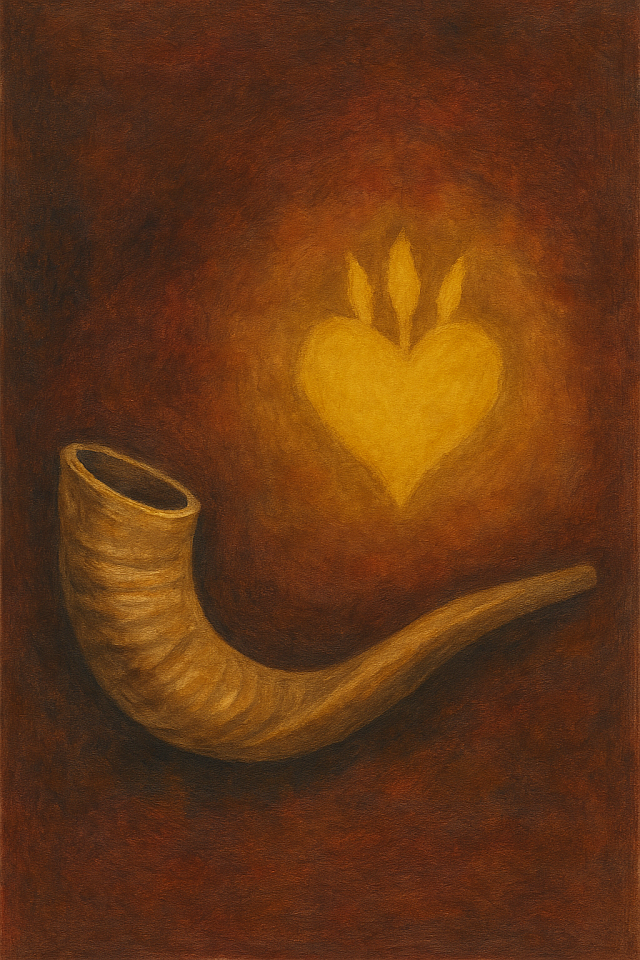
Machzor T'shuvat HaLev
Machzor T'shuvat HaLev is a modernized Machzor specifically designed for individual use on Yom Kippur Katan, however it can also be used as a regular weekday Siddur, by simply skipping over a few of the services and prayers.
Machzor T’shuvat HaLev is my attempt to reimagine Yom Kippur Katan not as a minor appendix to the liturgical calendar, but as a vital, necessary rhythm in a spiritually honest Jewish life. It grows directly out of the same theology as B’tzelem HaLo Mush’lam: the belief that human beings are not meant to approach G-d only once a year in a dramatic burst of repentance, but repeatedly, imperfectly, and without the illusion that we will ever arrive fully “fixed.” This machzor treats teshuvah not as a performance of purity, but as a practice of return — ongoing, cyclical, emotionally real, and deeply human.
Yom Kippur Katan exists in the spaces between months, and Machzor T’shuvat HaLev leans fully into that in-between-ness. This is a machzor written for thresholds: the end of one emotional landscape and the uncertain beginning of another. I approach the day not as a rehearsal for Yom Kippur, but as its theological counterweight. Where Yom Kippur is communal, overwhelming, and architecturally dense, Yom Kippur Katan is intimate, quieter, and more dangerous in its honesty. It asks us to take stock without the cover of grandeur, without a packed sanctuary, without the protective abstraction of “we.” This machzor is built for individuals and small communities who are willing to look closely at themselves at regular intervals and admit that growth is neither linear nor clean.
Machzor T’shuvat HaLev integrates adapted liturgy, original poetic material, reflective prompts, and interpretive expansions, all in the same voice and theological posture as my broader work. The Hebrew is treated with reverence, but not fear. Traditional structures are preserved where they hold emotional and spiritual weight, and reshaped where they function more as barriers than vessels. My English does not try to disappear behind the Hebrew; it stands alongside it as a language capable of prayer, grief, confession, and hope. As throughout B’tzelem HaLo Mush’lam, I make no attempt to pretend that language is neutral. Prayer is shaped by the bodies and lives that speak it, and this machzor acknowledges that openly.
Teshuvah in this machzor is not framed as a checklist of sins or a demand for self-erasure. It is framed as an act of listening — to the heart, to the places where harm has been done, to the places where harm has been endured, and to the quiet truths we avoid when time moves too quickly. Machzor T’shuvat HaLev does not assume that all wrongdoing looks the same or that all repair is immediately possible. It makes space for unfinished apologies, for boundaries that must remain firm, for grief that cannot yet be transformed into resolution. In keeping with the theology of imperfection, this machzor resists the idea that repentance must culminate in absolution to be meaningful. Sometimes teshuvah is simply naming what remains unresolved and carrying it forward with greater care.
The structure of the machzor reflects this philosophy. Movement through the service is less about ascending toward spiritual climax and more about circling inward. Repetition is intentional. Silence is intentional. Emotional fatigue is acknowledged as part of the work, not a failure of devotion. The language of the heart — lev — is not metaphorical here; it is central. This machzor assumes that spiritual work is embodied work, shaped by mental health, trauma, neurodivergence, joy, exhaustion, and resilience. It allows prayer to falter, to restart, to speak plainly, and sometimes to refuse easy conclusions.
Machzor T’shuvat HaLev also exists because I believe that frequent, smaller acts of return are an antidote to spiritual despair. Annual repentance can become so overwhelming that it collapses into avoidance or performativity. Monthly teshuvah, by contrast, invites humility. It teaches us to say, again and again: I am still here, and I still need to change. In that sense, this machzor is not only a prayerbook, but a discipline — a companion for those who want to live in honest relationship with themselves and with G-d without waiting for crisis, catastrophe, or the illusion of readiness.
Ultimately, Machzor T’shuvat HaLev is written for those who love Judaism but struggle with its insistence on certainty; for those who want prayer that acknowledges failure without reveling in shame; for those who believe that returning to the heart is itself a sacred act, even — especially — when the return is incomplete. It is a machzor rooted in the conviction that holiness does not emerge from perfection, but from the courage to keep turning back, month after month, breath by breath, heart to heart.
